Long-Form Content is NOT DEAD on YouTube!6 min read

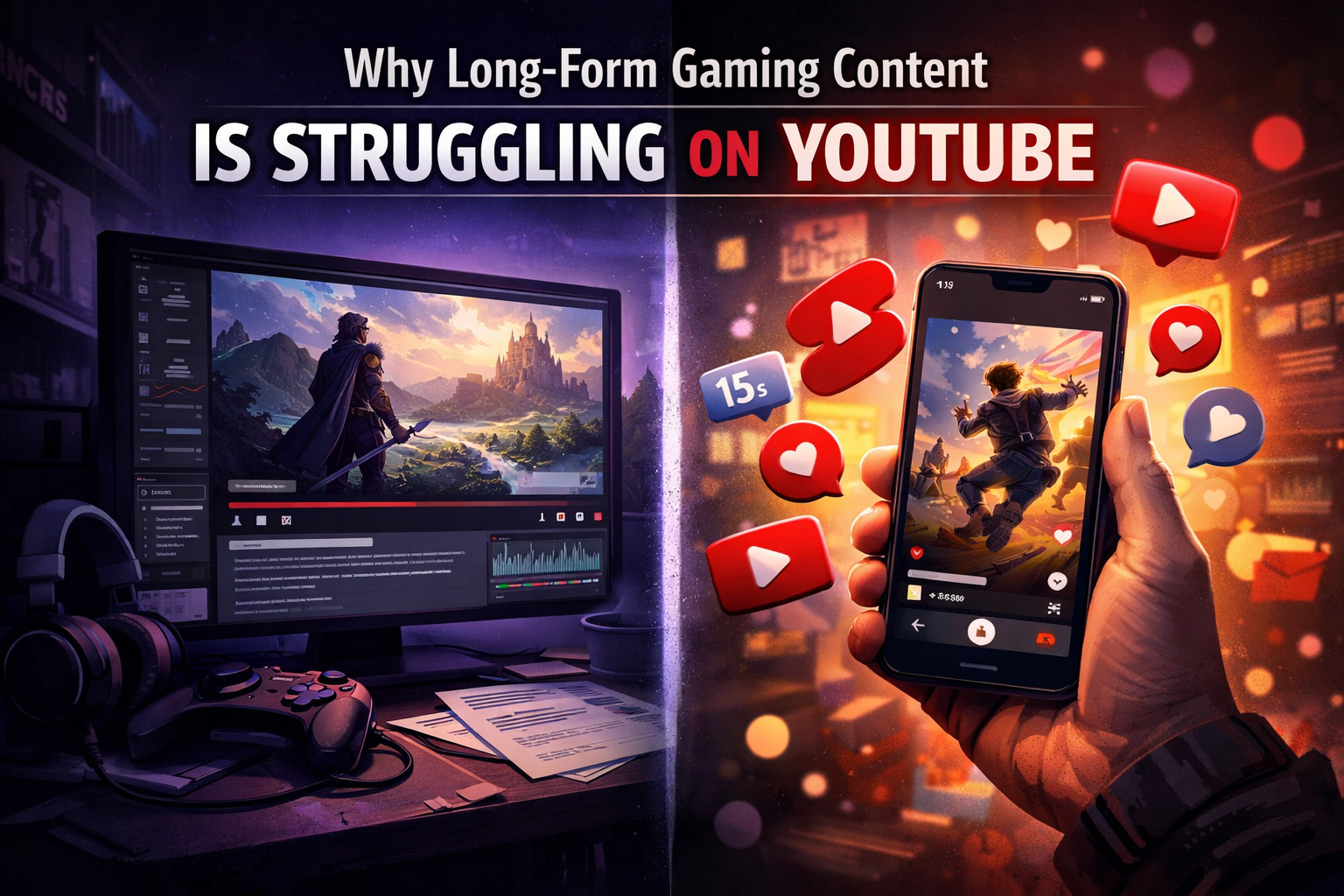
Why Long-Form Gaming Content Is Struggling

An Analysis and Insight From Inside the Creator Trenches

For most of my time on YouTube, long-form content felt like the foundation. It was where ideas lived. It was where analysis mattered. It was where effort seemed proportional to reward.


Over the past year, that relationship broke.


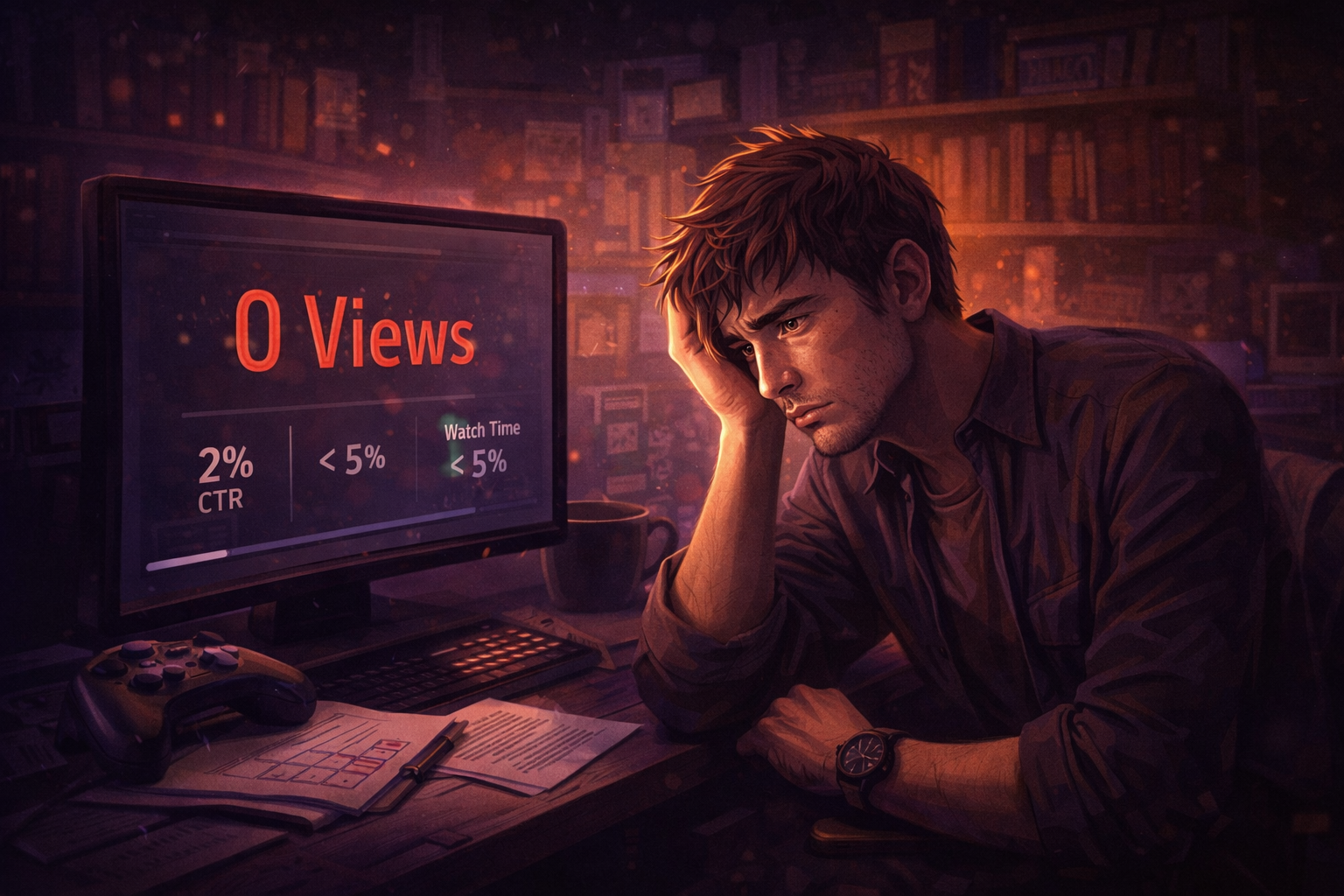
I am not writing this as an observer looking at charts from a distance. I am writing this as someone watching long-form videos die quietly on upload. Views stuck in single digits. Watch time that never stabilizes. Thumbnails that once worked now feel invisible. Meanwhile, Shorts on the same channel explode randomly, pulling in subscribers who never touch the long-form content at all.


This article is both an analysis of why this is happening, and an insight into how it feels to be inside it.

The Myth That Long-Form Is “Dead”

Long-form content is not dead, not even close.


What is dead is the assumption that long-form content will be discovered passively.


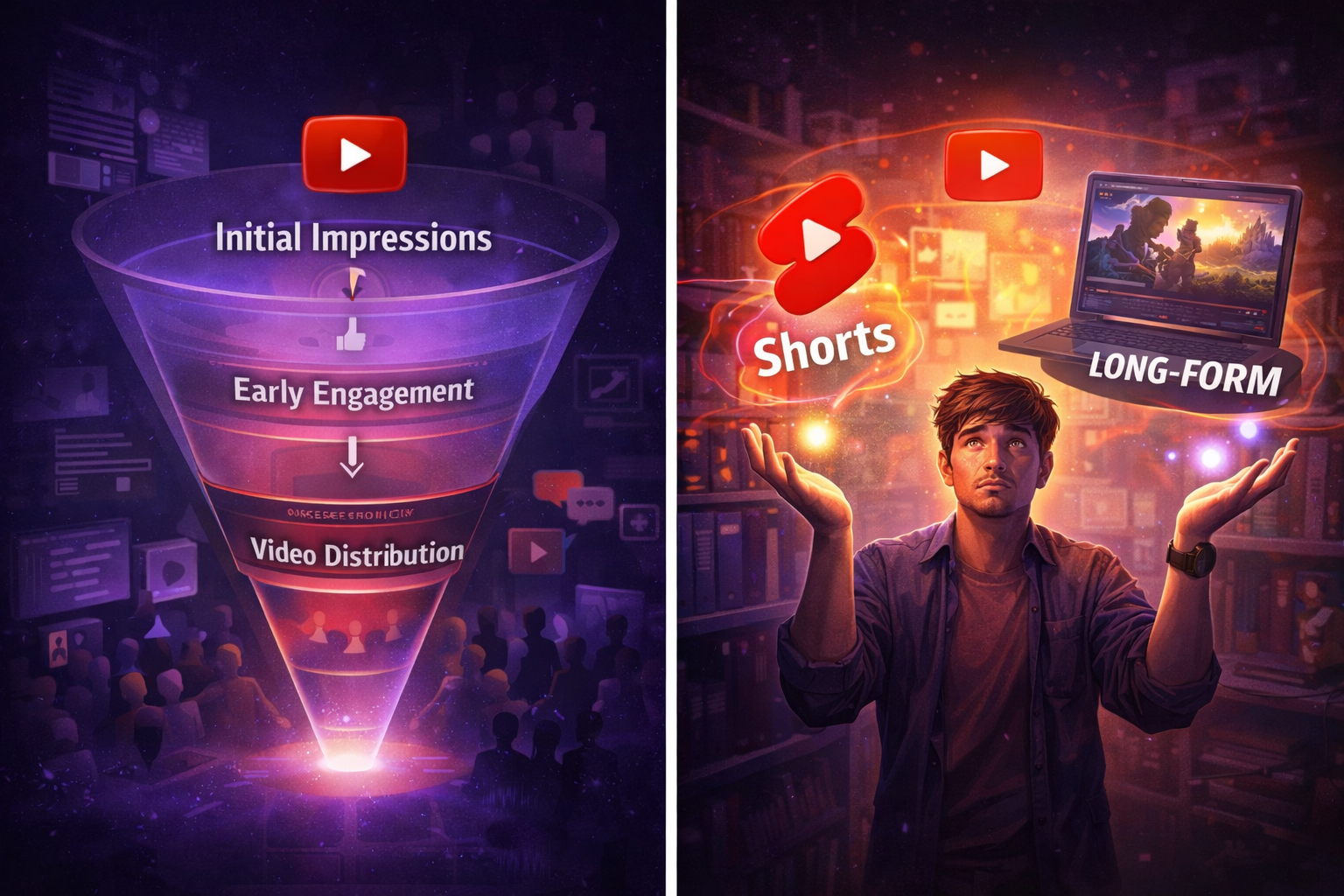
YouTube has not stopped valuing watch time or session duration. Those signals still matter. The issue is how YouTube decides who sees a video first. Discovery has narrowed. Videos are tested faster, against smaller groups, and expanded only if early signals are strong enough.


If a long-form video does not perform immediately, it rarely gets a second chance.


That does not mean the content failed. It means it never reached enough people to prove anything.

Algorithmic Compression and the Shrinking Test Window

One of the biggest shifts over the past year is what I would call algorithmic compression.


Videos are evaluated quickly. Retention, click-through rate, and early engagement now determine a video’s future within hours rather than days. For long-form gaming content, this is brutal.


Analysis takes context. It assumes interest. It assumes patience. A viewer might need thirty seconds before fully engaging, and that delay can already be enough to damage early performance.


Shorts do not have this problem. They begin immediately. They ask for nothing beyond a swipe. Their structure matches how the algorithm tests content.

This is not a quality issue. It is a format mismatch.

Titles and Thumbnails Are Not The Entire Problem

Creators are often told that weak titles or thumbnails are the reason long-form videos fail. Sometimes that is true. Often it is incomplete.


Titles and thumbnails now compete in a harsher environment. You are no longer competing only with similar gaming content. You are competing with everything YouTube believes a viewer might tolerate at that moment.


Thoughtful titles like “Why Side Quests Matter in RPGs” are honest, but not urgent. The algorithm increasingly favors curiosity gaps, emotional hooks, and immediate payoff.


For creators focused on analysis, this creates a constant tension between accuracy and visibility.

Publishing Time Matters Less Than Audience Alignment

Uploading at the perfect time matters far less than it used to.


YouTube no longer distributes videos primarily based on upload timing. It distributes them based on audience behavior patterns. If your audience is fragmented, or largely built through Shorts, the system struggles to identify when and to whom your long-form videos should be shown.


This is something I see clearly on my own channel.


Many of my subscribers arrived through Shorts. They do not browse subscriptions. They do not click notifications. They wait for algorithmic delivery. When a long-form video is tested against that audience and ignored, the system reads it as lack of interest.


That is not bad luck. It is structural mismatch.

Shorts Are Not the Enemy, But They Are Not Neutral

Shorts are not killing long-form content. But they are reshaping channels in ways that are easy to underestimate.


Shorts bring in subscribers quickly, but those subscribers do not automatically convert into long-form viewers. In some cases, they actively dilute long-form signals. When subscribers ignore uploads, the algorithm interprets that as disinterest.


This creates a feedback loop. The more Shorts you publish, the more Shorts-oriented your audience becomes. The harder it becomes for long-form content to pass early testing.


Shorts are not a mistake. But they require intentional strategy.

Metadata Still Matters, Just Not Like It Used To

Descriptions, tags, and keywords still help YouTube understand content. They do not drive discovery the way they once did.


Behavioral data outweighs metadata. What viewers do matters more than what creators write. Weak metadata can hurt clarity, but strong metadata cannot save a video that fails early engagement tests.


This is why optimization advice often feels hollow. Creators do the work, see no improvement, and assume they failed. In reality, the system never gave the video enough exposure to matter.

Why Gaming Content Is Hit Especially Hard

Gaming exists in an uncomfortable middle space.


It is oversaturated, yet highly fragmented. It is evergreen, yet dependent on specific interests. Broad analysis struggles because the algorithm favors specificity and emotional recall.


“This boss fight changed Final Fantasy forever” targets a shared memory.
“Why RPG boss design matters” asks for abstract curiosity.


Neither is wrong. One is simply easier to distribute.

The Emotional Cost of Invisible Effort

This is the part analytics rarely capture.


Long-form content takes time, focus, and emotional energy. When those videos fail silently, it creates a specific exhaustion. Not loud failure, but quiet dismissal.


You begin questioning effort. You hesitate to invest deeply. Shorts provide quick feedback. Long-form provides doubt.


Without reframing expectations, this becomes unsustainable.


Insight: The Environment Changed, Not the Creators

After watching these patterns repeat, I reached a difficult conclusion.


Long-form gaming content is not struggling because creators suddenly became worse. It is struggling because the environment changed faster than our creative instincts.


YouTube optimized for speed and predictability. Long-form analysis thrives on patience and trust. Those values are no longer aligned.


That does not make long-form pointless. It makes it a long-term investment rather than a discovery engine.

What I Am Adjusting Going Forward

I am not abandoning long-form content. But I am changing how I relate to it.


I treat long-form videos as archival work. As statements. As content that matters even if it underperforms, like full playthroughs of games in parts. I use Shorts for reach, but I no longer expect them to convert cleanly.


Most importantly, I am learning not to measure my worth by systems that no longer reflect effort or depth.


Final Thought

If you are struggling with long-form gaming content right now, you are not imagining it.


The system changed. The rules shifted. Many of us are still adjusting.


Understanding that does not solve everything, but it removes some of the blame.


And sometimes, that is enough to keep going.

Leave a Reply

Your email address will not be published. Required fields are marked *