
How eSports Players Maintain Peak Performance!
- Amethyst
- 21 February, 2026
Competitive gaming has long been seen by outsiders as something purely behind a screen. Endless hours of sitting still and having energy drinks and fast food. Plus a bit of raw talent. That image no longer holds up these days.
Pro eSports players today are more than just casual gamers. They train behind and beyond the screen. Winning is no longer just about game mechanics or team strategy. It is about consistent peak performance levels, one day after another.
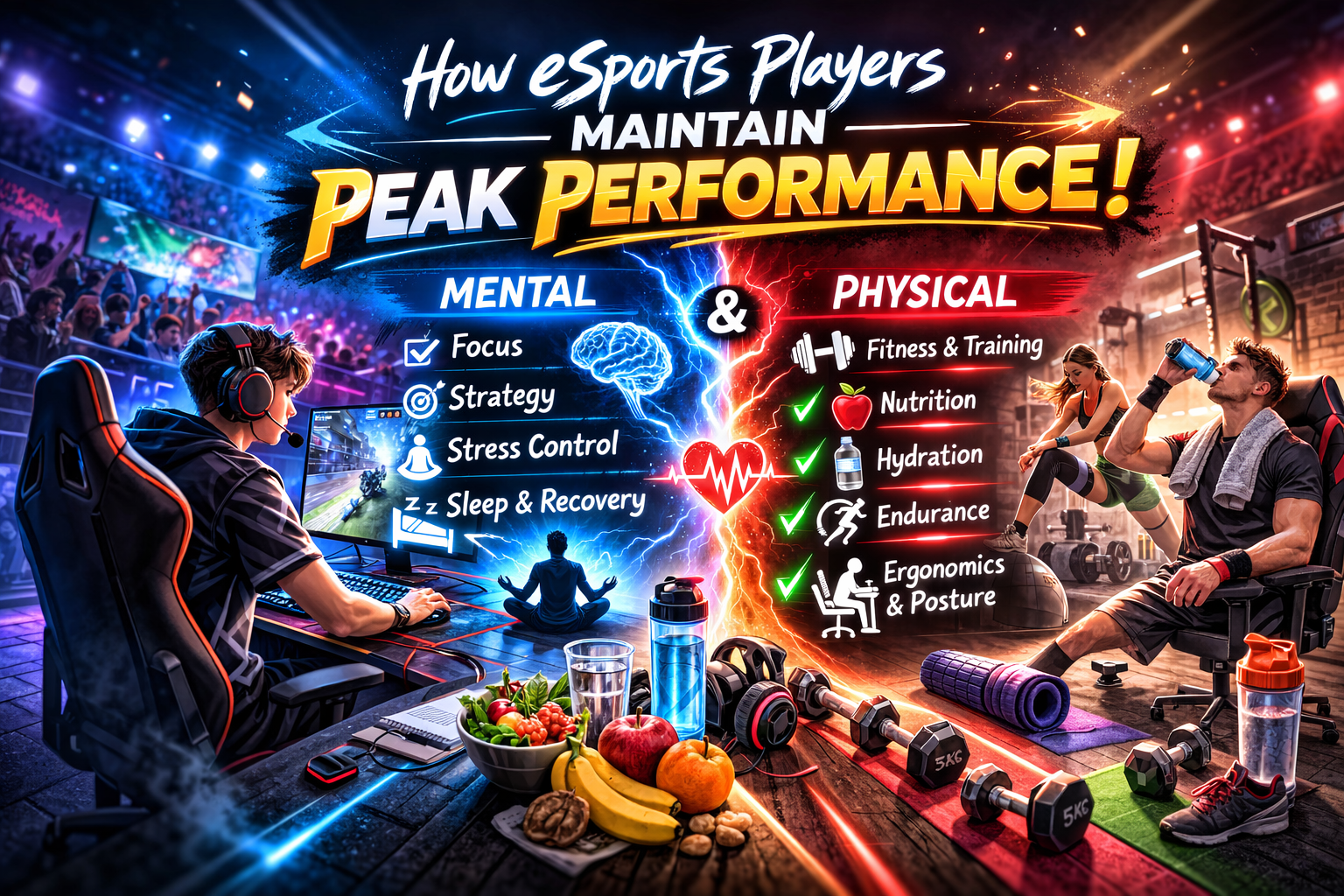
This article dives deep into how elite eSports players maintain both physical and mental fitness in different continents. It will tell you more about daily routines like: Food and sleep patterns, physical training, mental therapy sessions, and regional differences. The goal of this article is not to embrace the grind culture. It’s to objectively explain what actually works at the highest levels of competitive gaming.
eSports does not appear to be physically demanding. Players sit in chairs and only move hands, arms, and eyes for hours on end. Long training sessions however physically strain the neck, shoulders, wrists, and lower back. A poor posture and repetitive movements can also quickly lead to injuries. Carpal tunnel syndrome and back issues are among the more common injuries.
The brain is under constant pressure when training or competing. Professional players process large amounts of information in milliseconds. Reaction time, hand-eye coordination, and sustained attention, are pushed to their limits for hours. Fatigue directly impacts decision-making and mechanical precision. Players need to be in a better physical shape to have more mental capacity.
Physical fitness is no longer an optional requirement. Most professional teams now have structured exercise sessions in daily or weekly routines. The goal is not muscle growth or becoming aesthetically good looking. It’s about durability, circulation, and injury prevention.
That is achieved by a mix of cardio and strength training. Strength workouts work on posture-supporting muscles like back and shoulders. While cardio improves blood and oxygen flow to the brain. This combination helps players keep good posture and clear mind during long sessions.
European teams openly discuss structured fitness programs. Teams like Excel Esports and Fnatic include multiple workouts per week. North American teams often employ full-time performance coaches. Or partner with sports science institutions. In Asia, especially South Korea and China, physical training has historically been more limited. Though this is rapidly changing as injury rates and burnout have become harder to ignore.
Good foods and drinks are the central role in stable brain activity. To have consistent focus and fast reaction times, your brain needs a steady supply of glucose, oxygen, and micronutrients. These are mostly impacted by sugar spikes and crashes.
Because of that, diets focus on protein, healthy fats, and micronutrient-rich foods. Lean protein foods stabilize energy levels and support muscle recovery. Complex carbohydrates provide fuel for the body that lasts for hours instead of short crash and burns. Healthy fats, particularly omega-3 acids, are linked to a good cognitive function and emotional regulation.
Fruits and vegetables are included in a diet for vitamin and mineral content. Research into eSports nutrition, shows that players historically lacked vitamins like magnesium, B-vitamins, zinc, and omega-3. These vitamins are all associated with attention span, memory function and reaction speed.
Teams often structure meals around their training schedules. Heavy and large meals are avoided before competition to prevent a crash. Players eat more balanced meals throughout the day instead. Drinking is as important as eating, with water and electrolyte balance monitored closely.
Energy drinks and caffeine have become more regulated. Caffeine improves alertness, but can lead to anxiety and sleep disruption. Teams limit energy drinks to specific times or encourage alternatives like green tea.
Some eSports organisations employ chefs to cater to player needs. Shared meals with the team also serve a social function. They heighten team cohesion and provide mental breaks from screen time.
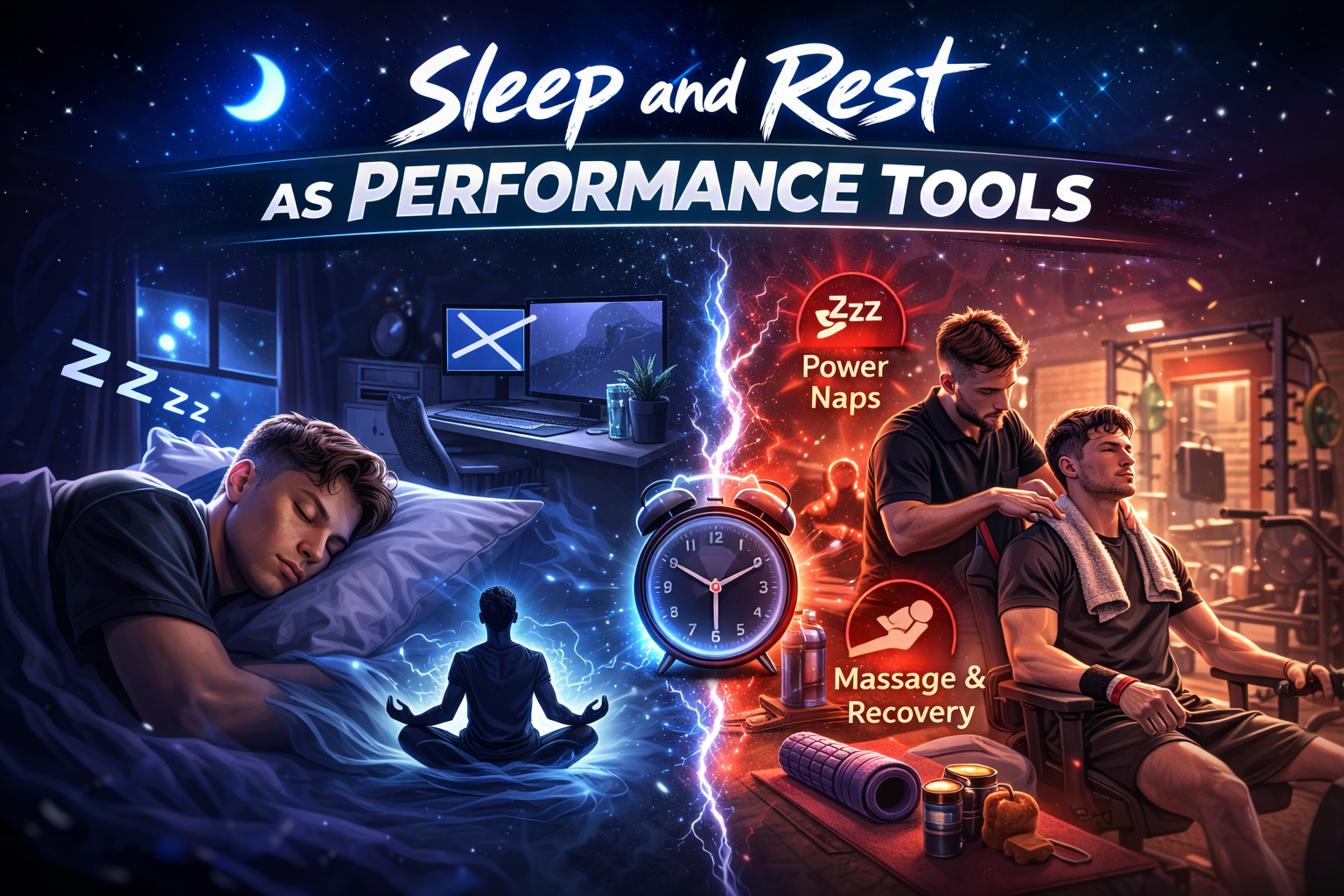
The most neglected part of performance in eSports history is sleep. Studies show that many professional players sleep less than the recommended seven to eight hours per night. Practicing late at night, international competition, and irregular routines all contribute to sleep deprivation. It has been common for teams in Asia to practice until early morning hours. This work culture is slowly shifting towards more regular hours lately.
Top players have become vocal advocates for better sleep. League of Legends player Faker has publicly discussed changing his routine to give priority to seven to eight hours of sleep. In addition, he has removed screens before bedtime and uses relaxation techniques.
Modern teams now attempt to regulate practice times. They also teach players about sleep routines. Reducing blue light exposure at night and using short naps during the day strategically, helps overall resting routines.
Recovery goes beyond sleep. Massage therapy, physiotherapy, and mobility work help rest physically. Regular breaks during practice sessions are now essential rather than optional in the past. A break every hour reduces physical stress and mental fatigue.
The mental requirements for competitive gaming are extreme. Players must perform under constant high pressure, handle public criticism, and recover quickly from mistakes. Anxiety and burnout are persistent threats to wellbeing.
Sports psychology has become a new key component of professional eSports. Teams employ psychologists that work on a set of things with players. Stress management, emotional regulation, communication with staff and colleagues, and confidence building are subjects on the board.
Mental training includes controlled breathing and mindfulness, to visualisation and cognitive behaviour therapy. Breathing exercises regulate the nervous system under high pressure. Visualisation helps players rehearse certain scenarios and their responses. Cognitive behaviour therapy helps players process losses. To see them as learning opportunities, not like personal failures.
Team dynamics are another major psychological factor. Good communication, trust, and shared responsibility among team members, reduce stress. Regular mental check-ins and encouraging discussion about emotional state of mind, strengthens the team dynamic.
Burnout prevention has become major focus as well. Teams give players days off and limit practice hours. Players are encouraged to pick up hobbies beyond the screen. The goal is to have long careers rather than quick wins.
Beyond general mental health, players have cognitive training on their schedules. Reaction time training, aim training, and attention exercises are standard procedure across many games.
There are training tools designed to improve awareness and multitasking. The effectiveness of those brain-training tools is debated. Targeted training that closely resembles in-game tasks, tend to show more benefits. The key to training is training in moderation. Mental overtraining can lead to fatigue just as quickly as physical overtraining.
There are still different methods in how eSports athletes approach peak performance.
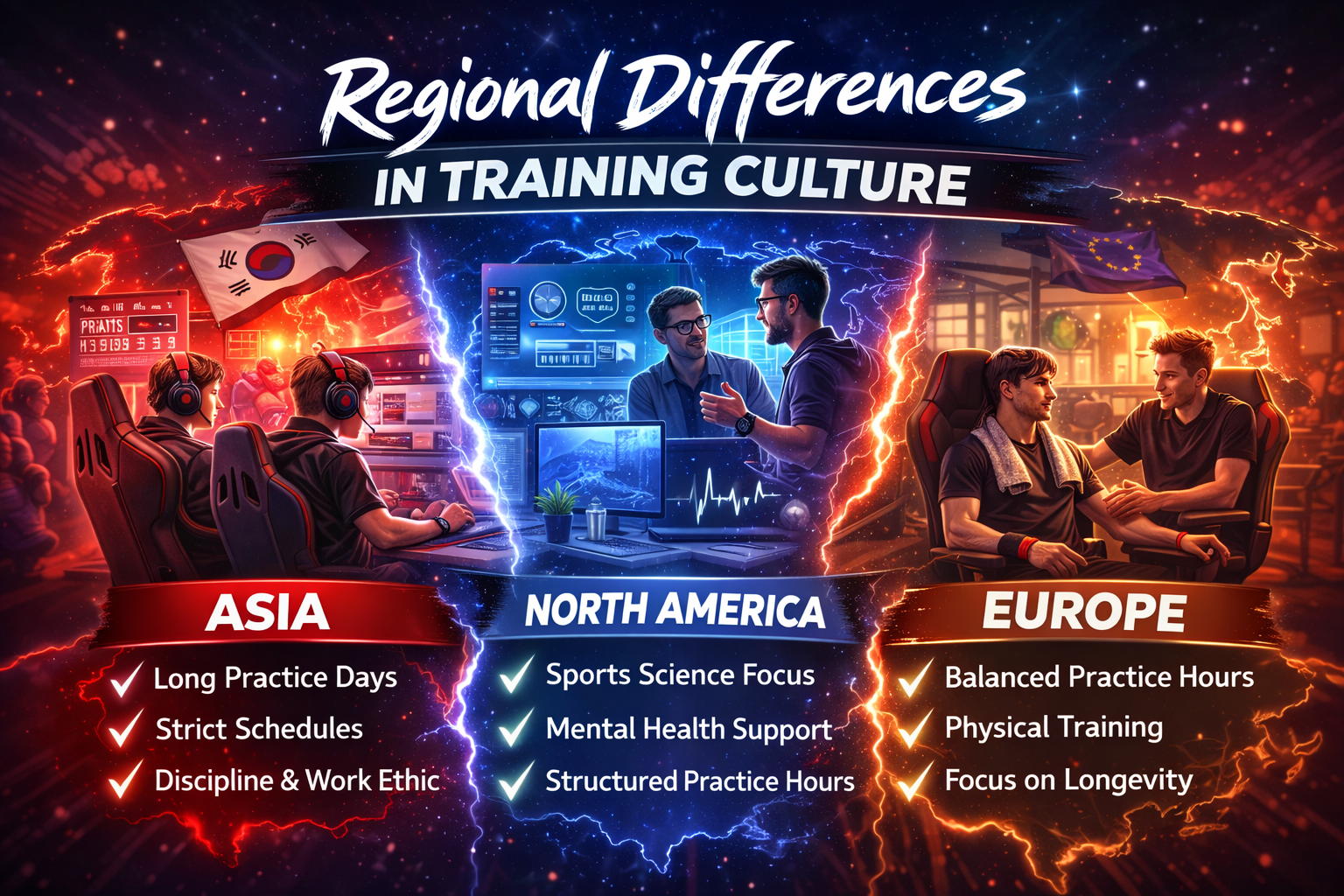
In Asia, long practice days have historically been the norm. Players often live with tight and structured routines. Discipline and work ethic remain the standard, but there is growing awareness of the risks associated with training too many hours and poor to no recovery.
North American teams emphasize on sports science and mental health support. Teams employ staff for nutrition, fitness, and psychology. Practice hours are shorter but more structured for players.
European teams take the middle ground of the approaches mentioned before. They strive for a mix of physical training and flexible practice schedules. There is a strong focus on a balance between training and free time. Longevity for the players, particularly veterans, brings more success longterm.
Despite these differences, all regions are moving toward a more holistic model that prioritizes sustainability for longstanding careers.
ESports success from pure raw talent and endless grinding is passé. They demand high levels of care, just like traditional sports do. Pro players perform when they take care of body and mind.
The industry continues to grow and mature year by year. These practices will become even more refined. For aspiring pro players and casual players alike, what to do is clear. Sustainable performance doesn’t come from pushing all the way. It is built by routines that support long-term health.
DiFrancisco-Donoghue, J. et al. (2019). Research on physical health and body composition in esports athletes. Journal of Sport and Health Science.
Pedraza-Ramirez, I. et al. (2020). Psychological performance factors in esports. Frontiers in Psychology.
Rudolf, K. et al. (2020). Sleep patterns and recovery in professional esports players. International Journal of Environmental Research and Public Health.
UPMC Sports Medicine. Performance, sleep, and nutrition recommendations for esports athletes.
Public interviews with professional players including Lee “Faker” Sang-hyeok discussing sleep and mental preparation.